Support calculator workflow
Divorcepath’s support calculator is designed for professional child support and spousal support work under the Federal Child Support Guidelines and the Spousal Support Advisory Guidelines.
This guide explains the main sections of the calculator and the information you should review when preparing a support report. The examples use a spousal and child support calculation for an Ontario matter, Cynthia Myers and Anthony Campbell, for the 2026 tax year.
Getting started
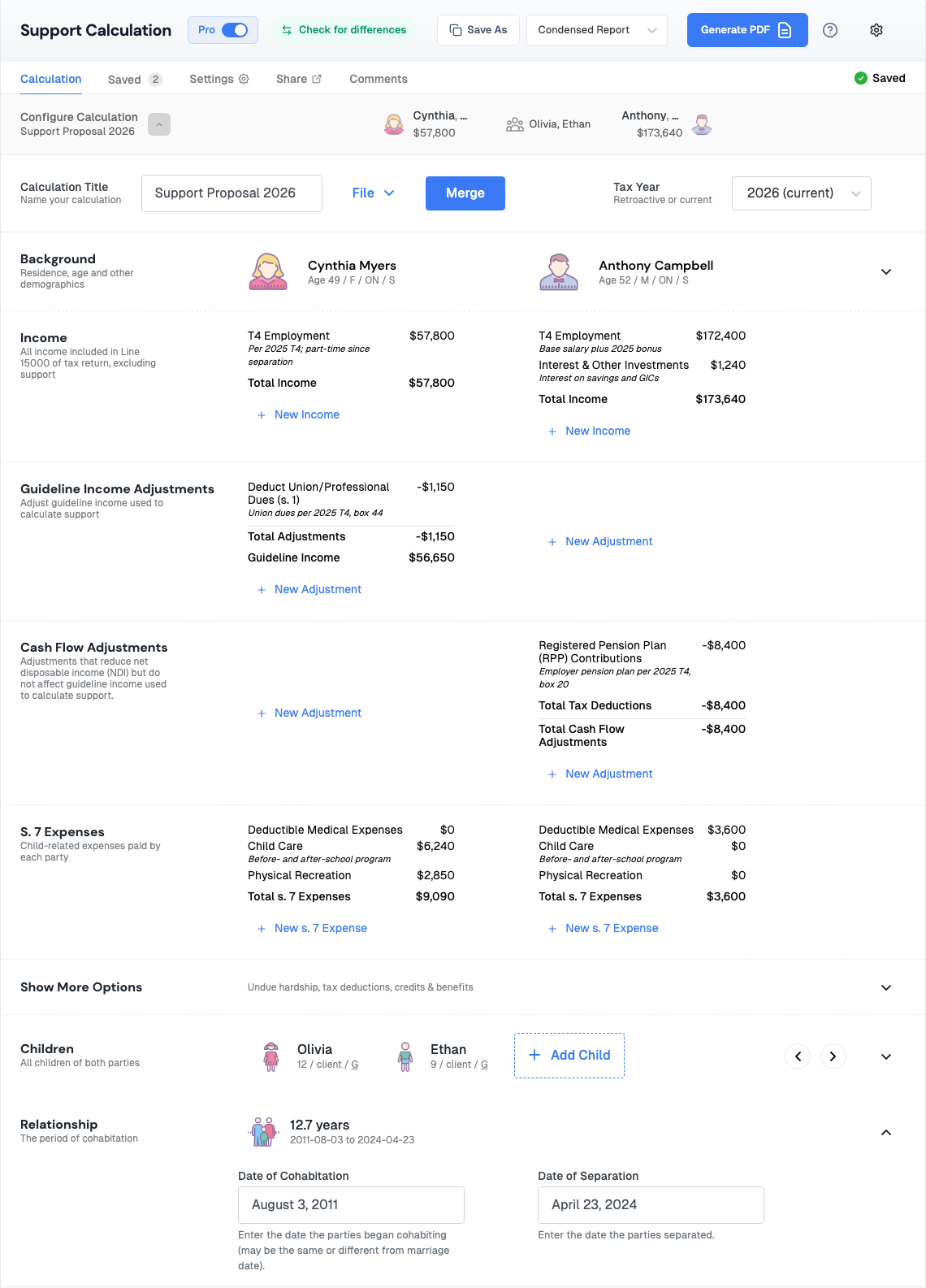
Open the matter, go to Calculations, and click New calculation on the Spousal & Child Support card. Use the Child support card instead if you only need child support. Make sure the Pro toggle at the top of the calculator is on.
Divorcepath fills in the parties, children, income and section 7 expenses already recorded on the matter. All of the inputs sit under Configure Calculation: give the calculation a clear Calculation Title, confirm the Tax Year, then work through each section. Changes save automatically. If the matter’s information changes later, Check for differences at the top of the calculator shows what is different so you can choose which values to keep.
1. Background information
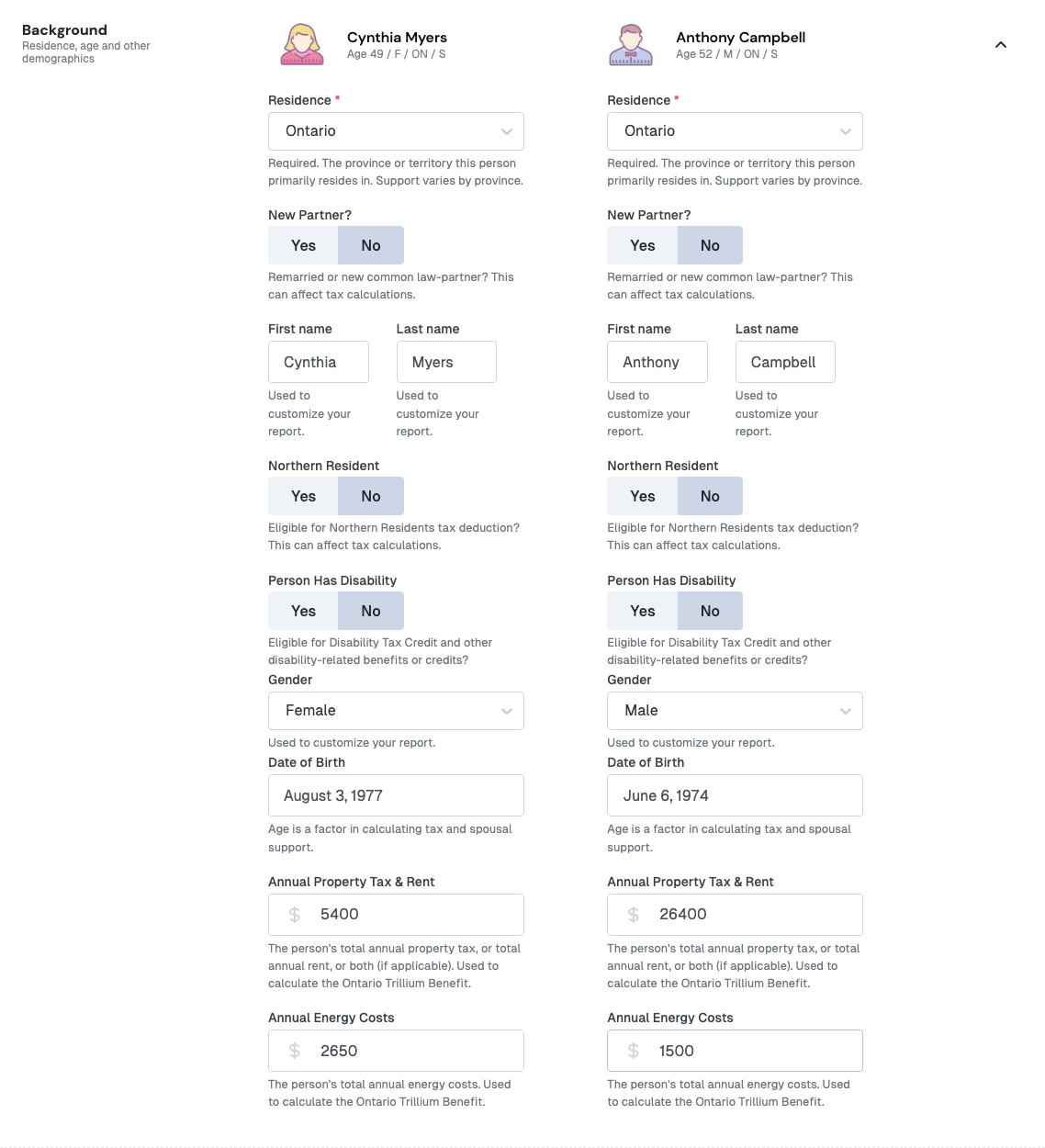
Click the arrow on the Background row to review each person’s details: Residence, New Partner?, name, Northern Resident, Person Has Disability, Gender and Date of Birth. For Ontario residents you can also enter annual property tax and rent, and annual energy costs, which are used to calculate the Ontario Trillium Benefit. These values help determine the correct table amounts, tax assumptions and report context.
2. Income
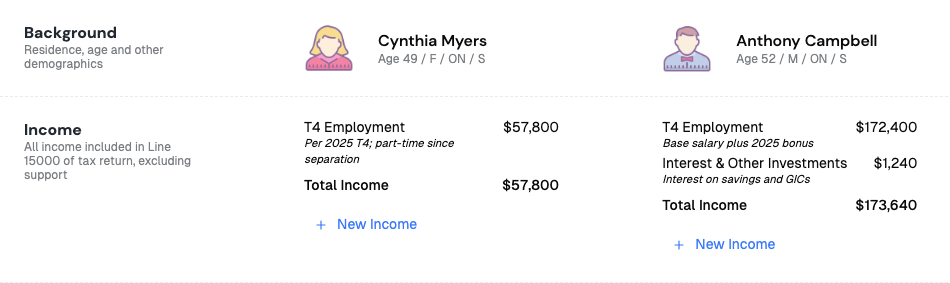
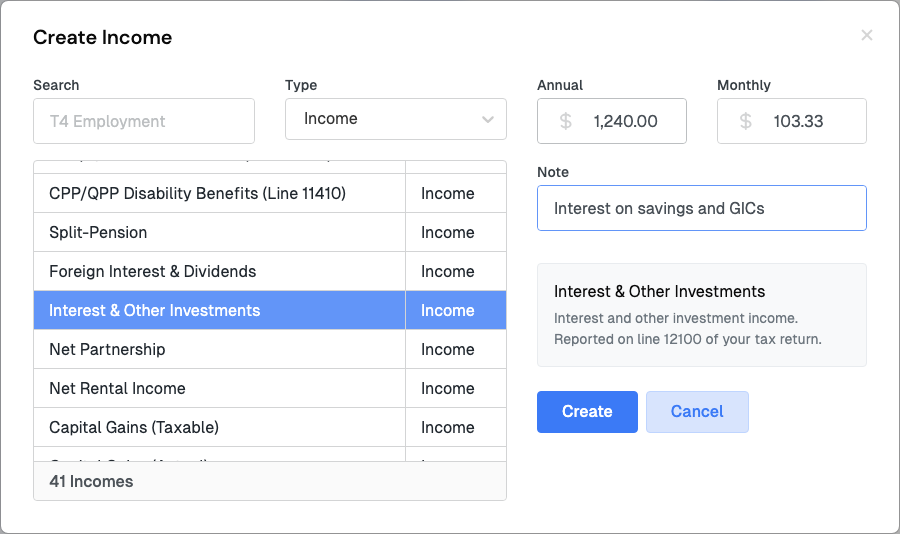
The Income section lists each person’s income included in line 15000 of the tax return, excluding support. Click New Income under a person, choose the income type, and enter an annual or monthly amount with an optional note. Divorcepath handles employment, self-employment, pension, investment, rental and other common income types. Click an existing income line to change it. The quality of the support output depends on the quality of the income data you enter.
3. Guideline income and cash flow adjustments
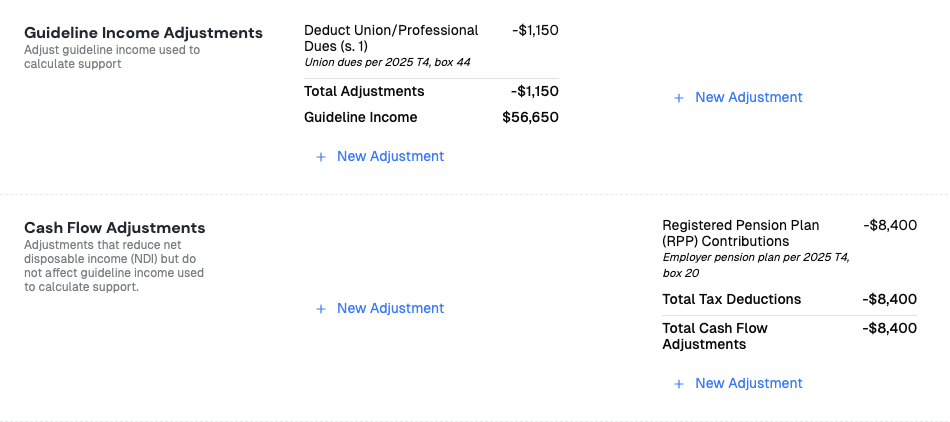
Use Guideline Income Adjustments for adjustments to the income used to calculate support, such as the Schedule III deductions for union or professional dues, or imputed income under section 19. The section shows each person’s resulting Guideline Income. Use Cash Flow Adjustments for amounts that reduce net disposable income without changing guideline income, such as registered pension plan contributions or group benefit premiums. These adjustments can materially affect the result, so they should reflect the actual legal and factual position for the matter.
4. Section 7 expenses
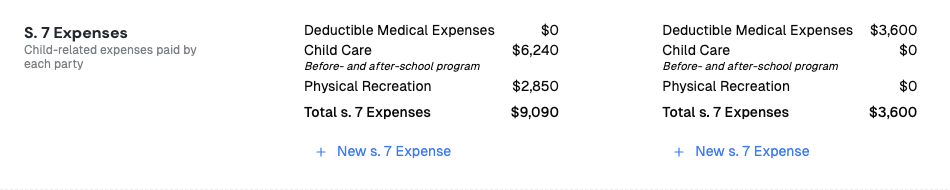
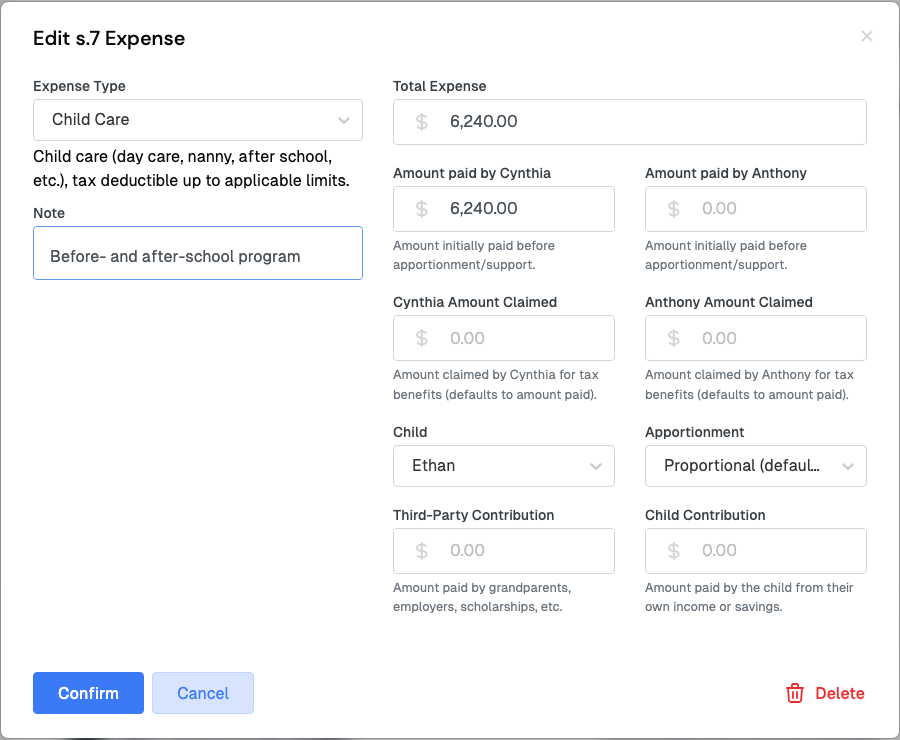
Record child-related section 7 expenses under S. 7 Expenses. Click New s. 7 Expense, or click an existing expense to edit it, and set the Expense Type, Total Expense, the amount paid by each person, the Child it applies to and the Apportionment. You can also record third-party and child contributions. These figures affect child support and, in some scenarios, the broader support analysis.
5. Tax, deduction, and benefit settings
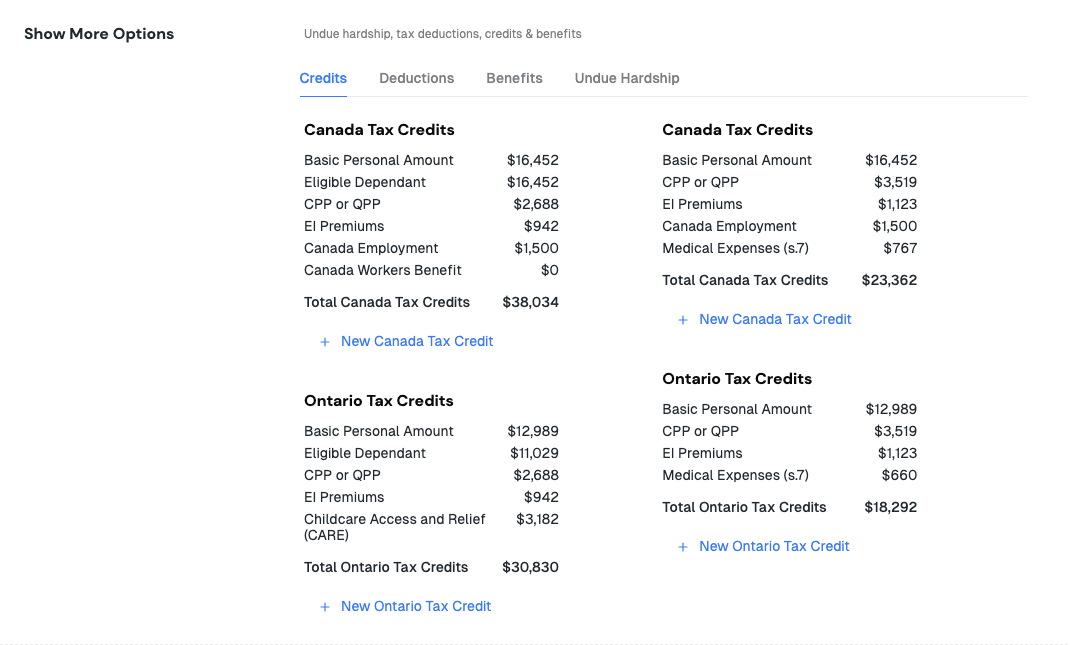
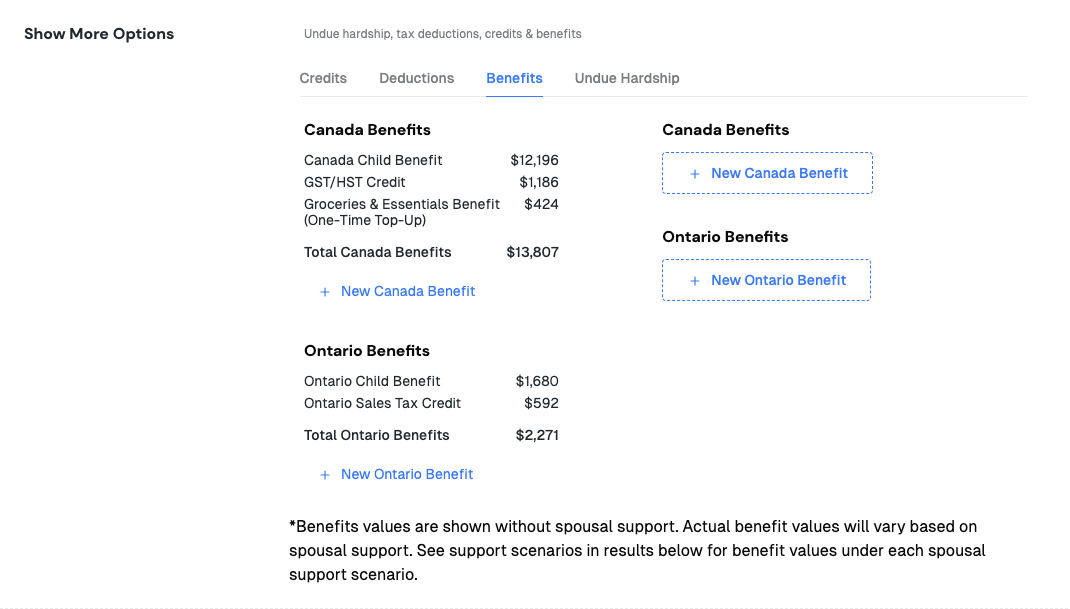
Expand Show More Options to review the tax and benefit details behind the result. The Credits tab shows the federal and provincial tax credits Divorcepath has calculated for each person, and you can add others. Use Deductions to add tax deductions, and Benefits to review government benefits such as the Canada Child Benefit and provincial child benefits. Benefit amounts on this tab are shown before spousal support; the support scenarios in the report show the benefits under each scenario. The Undue Hardship tab is where you record undue hardship factors where relevant.
6. Children
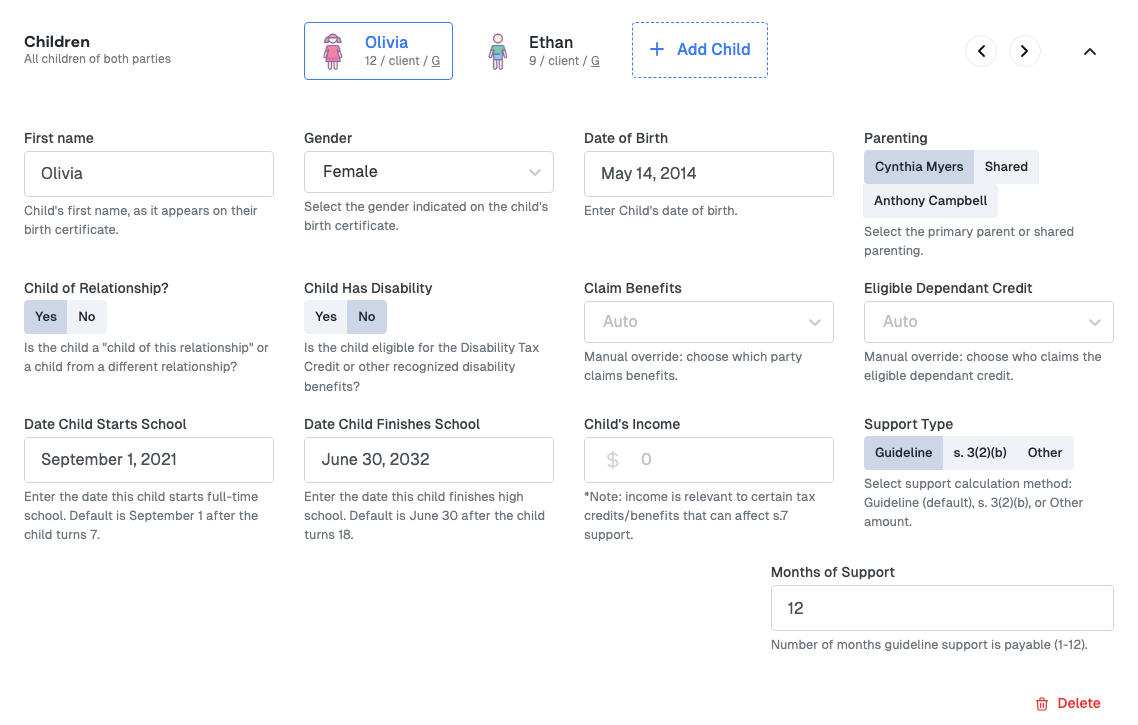
In Children, select a child (or click Add Child) and confirm the details that affect the calculation: date of birth, Parenting, whether the child is a child of the relationship, disability, who claims benefits and the eligible dependant credit, school start and finish dates, the child’s income, and the support type. Parenting arrangements matter here: sole, shared and split arrangements produce different child support results, and children from a prior relationship are recorded separately.
7. Relationship dates and settings
Under Relationship, enter the Date of Cohabitation and Date of Separation. The length of the relationship is used in the spousal support analysis.

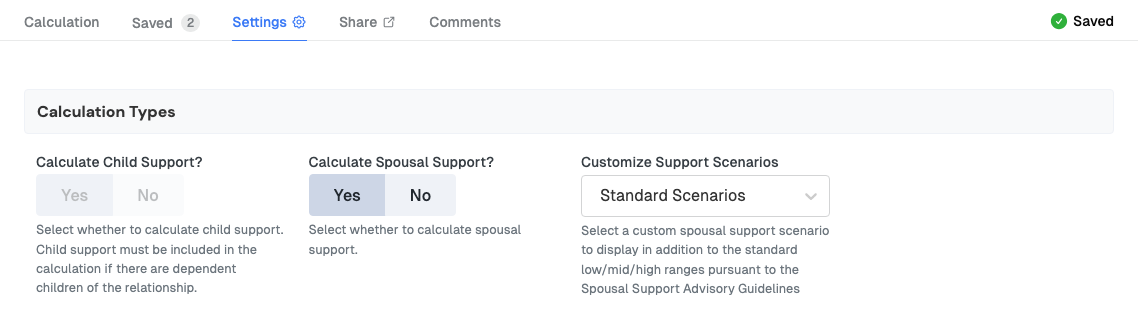
Then open the Settings tab to review the calculation settings. Calculation Types controls whether child support, spousal support, or both are calculated; child support is always included when there are dependent children of the relationship. The same tab has restructuring, lump sum and financial settings, such as the tax treatment of spousal support and who pays child and spousal support.
8. Review the results
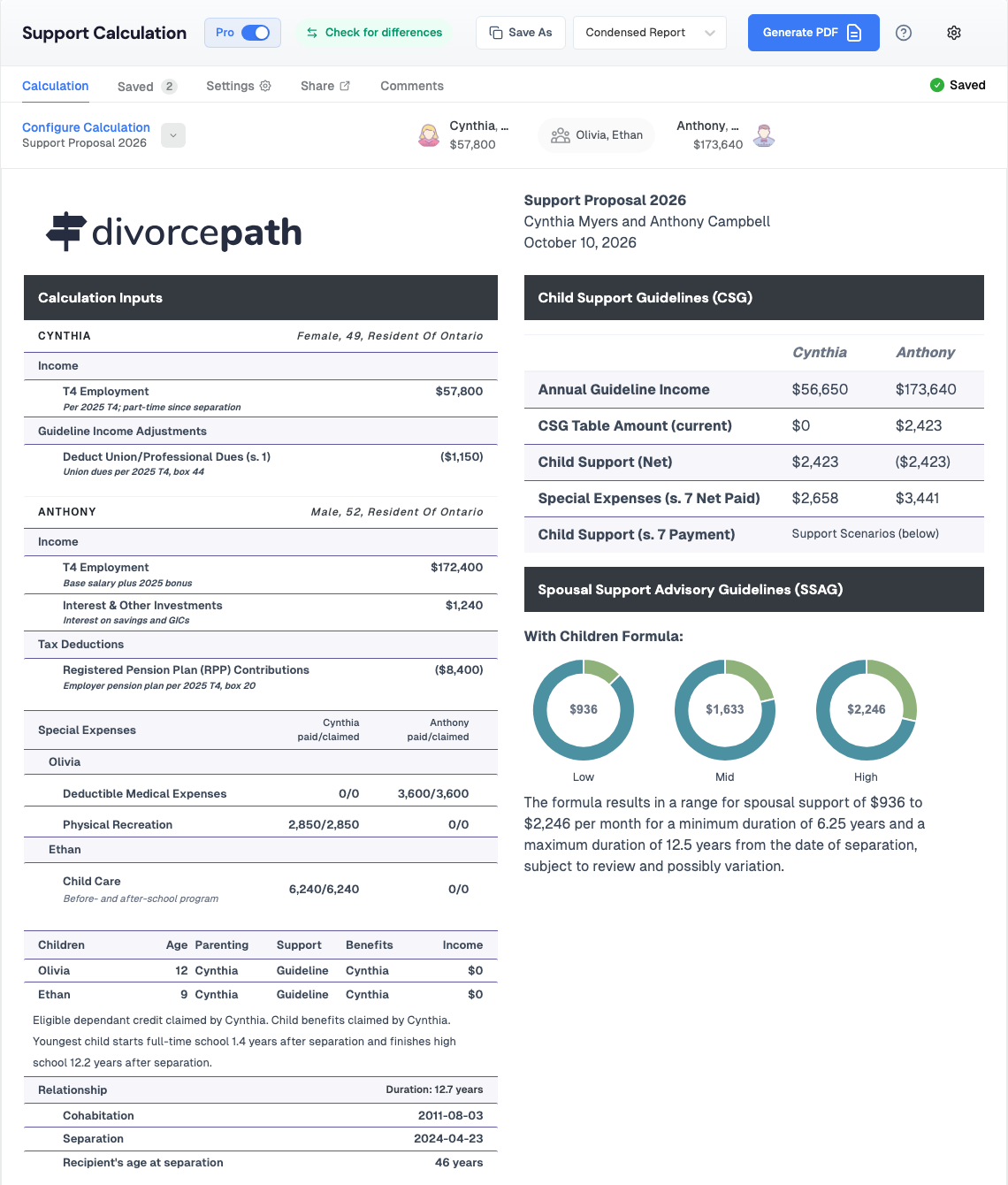
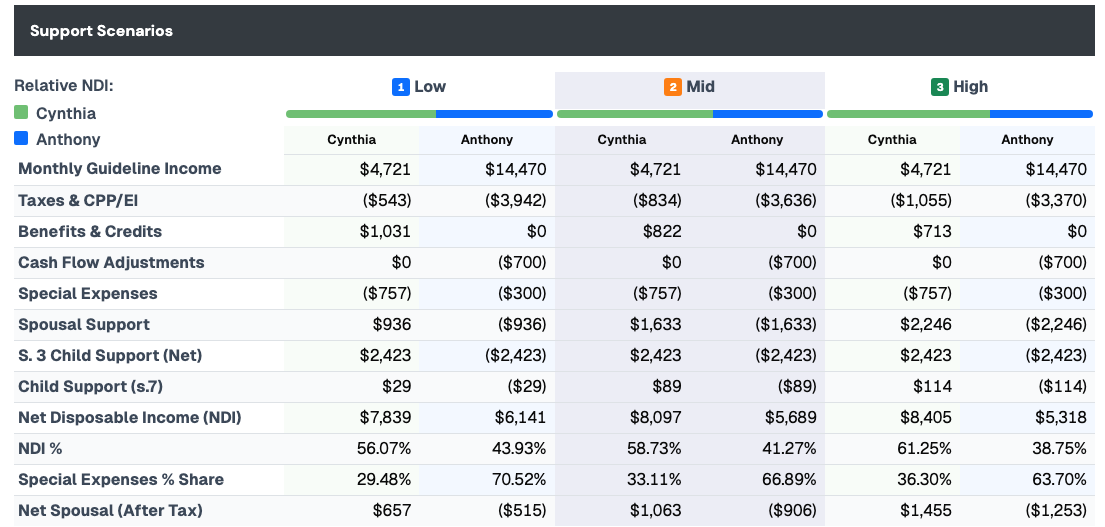
There is no separate calculate step. The Support Report below the inputs recalculates as you change values, so you can collapse Configure Calculation to read it. Review the child support amounts, the spousal support ranges and durations, and the support scenarios, then choose a report format (for example Condensed Report or Detailed Report) and click Generate PDF. Confirm the final output before sharing it with counsel, clients, the court or a mediator.
Best practice
Use the calculator as part of a connected workflow. If you are also preparing court forms, financial disclosure, or agreement drafts, make sure the support inputs reflect the same matter data used across the rest of the file.
If you need help with a specific support scenario, contact Divorcepath support at [email protected].
